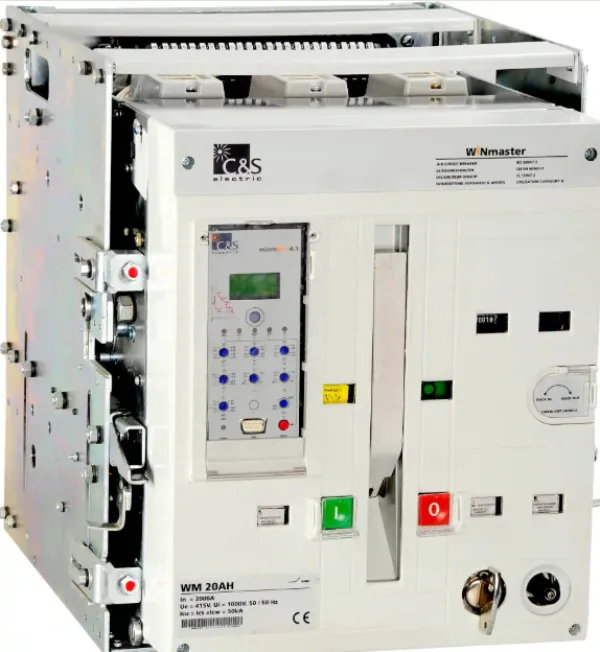
Air circuit breakers are commonly associated with low-voltage power distribution systems where higher current capacities, switching requirements and sophisticated protection functions may be involved. Their role makes supplier selection especially important for industrial facilities, large commercial installations and critical distribution panels.
When evaluating an ACB Dealer, procurement teams should compare technical support and product suitability alongside commercial factors.
Start With the Electrical Application
The first question should be where the ACB will operate.
An incomer in a main low-voltage panel has different responsibilities from a bus coupler or outgoing feeder. The expected load, prospective fault level and coordination requirements influence the appropriate breaker configuration.
Buyers should therefore provide details such as:
- Rated operational current
- System voltage
- Breaking capacity
- Number of poles
- Fixed or draw-out configuration
- Protection trip unit requirement
- Control voltage
- Required accessories
This information creates a much stronger basis for comparison than simply requesting an ACB of a particular amperage.
Compare Protection Features Carefully
Modern ACB configurations can include different protection and monitoring functions. Depending on the model and application, buyers may encounter adjustable protection settings and electronic trip units designed for specific system requirements.
The required functionality should be determined by the electrical design.
Additional accessories can include auxiliary contacts, closing releases, shunt releases, under-voltage releases and motorized operating mechanisms. Missing an essential accessory during procurement can delay panel completion or commissioning.
Check Compatibility With the Panel
Physical compatibility is another important consideration, particularly when replacing an existing breaker.
A technically similar ACB does not automatically mean it can be installed directly into an existing panel. Dimensions, cradle configuration, terminal arrangements, interlocks and accessories can affect replacement suitability.
For maintenance teams in industrial regions across Maharashtra, verifying these details before ordering can prevent avoidable downtime.
Evaluate Supply Capability Beyond Price
Price matters in industrial procurement, but the lowest quotation is not automatically the most suitable option.
A useful dealer evaluation should consider:
- Product specification clarity
- Availability of required configurations
- Accessory support
- Documentation
- Supply consistency
- Understanding of industrial applications
- Ability to support related electrical requirements
Deeva Electricals and Automation serves electrical procurement requirements in Maharashtra with ACBs and other switchgear components for industrial and commercial applications.
For a new project, procurement teams benefit from sharing the approved electrical schedule or required technical specification. For replacements, the existing breaker details should be documented carefully.
Choosing an ACB dealer is ultimately about obtaining a breaker that fits the electrical design, panel arrangement and operational requirements. A technically accurate purchase can be considerably more valuable than a superficially cheaper option that creates compatibility or commissioning problems later
Keywords