Electrical safety involves more than protecting circuits against overloads and short circuits. Leakage current can create a different type of electrical hazard, which is why residual current protection is incorporated into many electrical installations.
An RCCB Supplier can provide devices with different current ratings, pole configurations and residual current sensitivities, but the correct choice depends on the design and intended use of the electrical system.
What an RCCB Is Designed to Detect
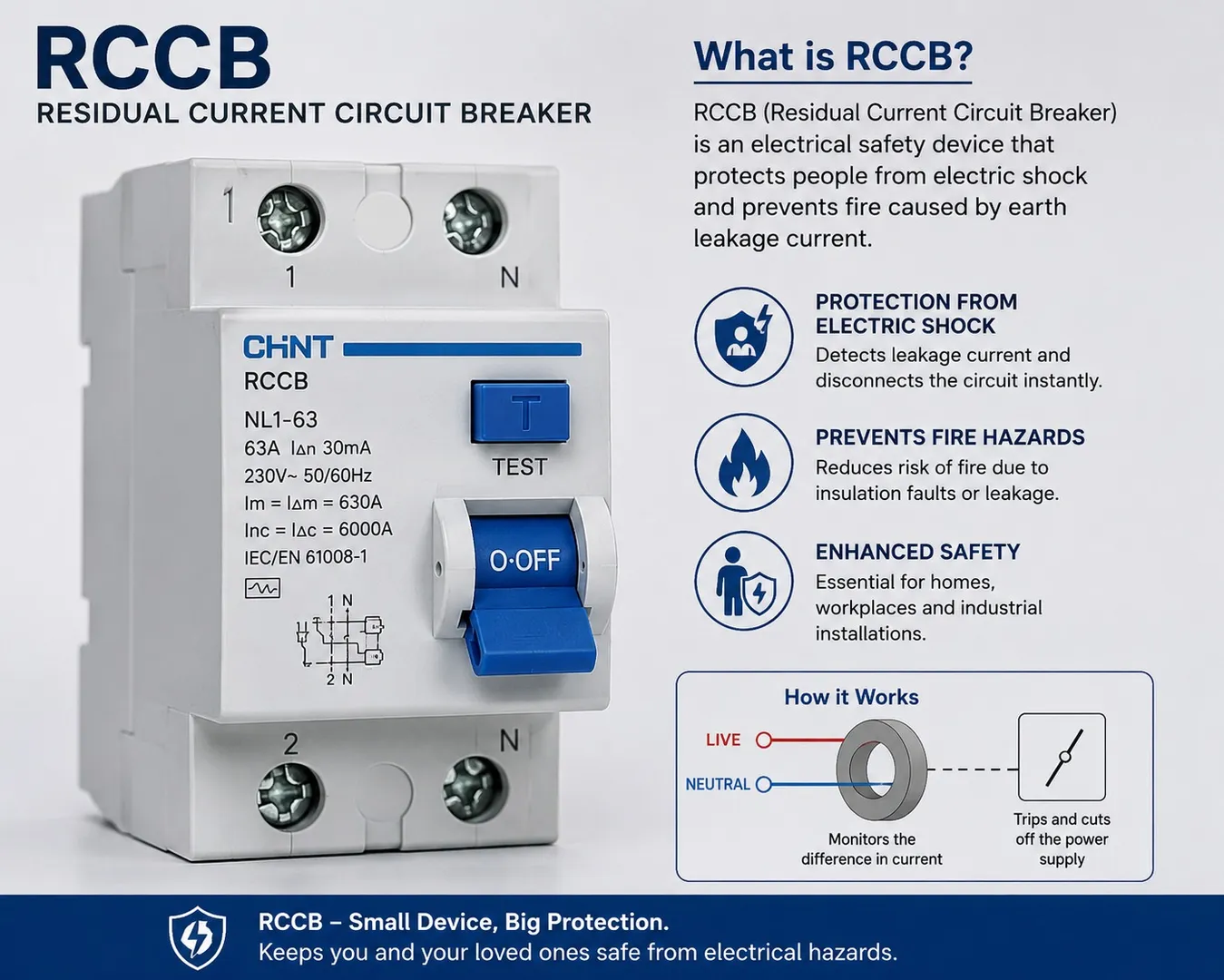
A residual current circuit breaker monitors the balance between current flowing through live conductors. Under normal operating conditions, the current entering and returning through the circuit should remain balanced.
When current leaks through an unintended path, an imbalance can occur. The RCCB is designed to detect specified residual current conditions and disconnect the circuit.
This makes residual current protection distinct from conventional overcurrent protection.
RCCB and Overcurrent Protection Perform Different Jobs
One misunderstanding during electrical procurement is assuming that every breaker provides the same type of protection.
An RCCB primarily addresses residual or leakage current. Protection against overload and short-circuit conditions may require an appropriate overcurrent protective device as part of the electrical design.
Understanding this distinction is important when planning distribution boards and industrial panels.
Specifications That Affect RCCB Selection
Electrical contractors and panel builders generally consider several factors:
- Rated current
- Residual operating current
- Number of poles
- Rated voltage
- RCCB type
- Nature of connected loads
- Upstream protection
- Installation requirements
Modern electrical installations may contain electronic equipment, drives, power supplies and other loads that influence residual current characteristics. The device type therefore needs to correspond with the circuit and applicable design requirements.
Applications Across Maharashtra
RCCBs may be incorporated into residential, commercial and selected industrial distribution systems. In Maharashtra, they can be relevant to offices, workshops, commercial developments, institutional facilities and industrial premises where residual current protection forms part of the electrical safety design.
Environmental and operating conditions should also be considered, particularly where installations experience moisture, dust or demanding industrial usage.
Deeva Electricals and Automation supplies RCCBs alongside switchgear and panel-related electrical components for customers across Maharashtra. For procurement teams, providing the circuit details and required sensitivity makes it easier to identify suitable specifications.
RCCB selection should ultimately be based on electrical design rather than assumptions about a universal device. When residual current protection is correctly coordinated with the rest of the installation, it becomes part of a broader electrical safety strategy covering protection, isolation and reliable distribution.
Keywords